Everyone Knows the Face — Athena Trace 2026 Writeup
One reverse image search identifies the photograph. The points are in two details on the same page: a pseudonym, and a date that isn't the date of the event.
The challenge
The most reproduced photograph of the twentieth century. Everyone knows the face; almost nobody knows the day. Name the photographer, the date the shutter fired, and the city.
Flag format:
trace{PhotographerSurname_YYYY-MM-DD_City}— the surname he is credited under, on its own; the city in its usual English spelling. Underscores for spaces.
The identification
Reverse image search resolves this in one step. The photograph is Guerrillero Heroico — the portrait of Che Guevara in a beret that became, by most accounts, the most reproduced photographic image of the twentieth century.
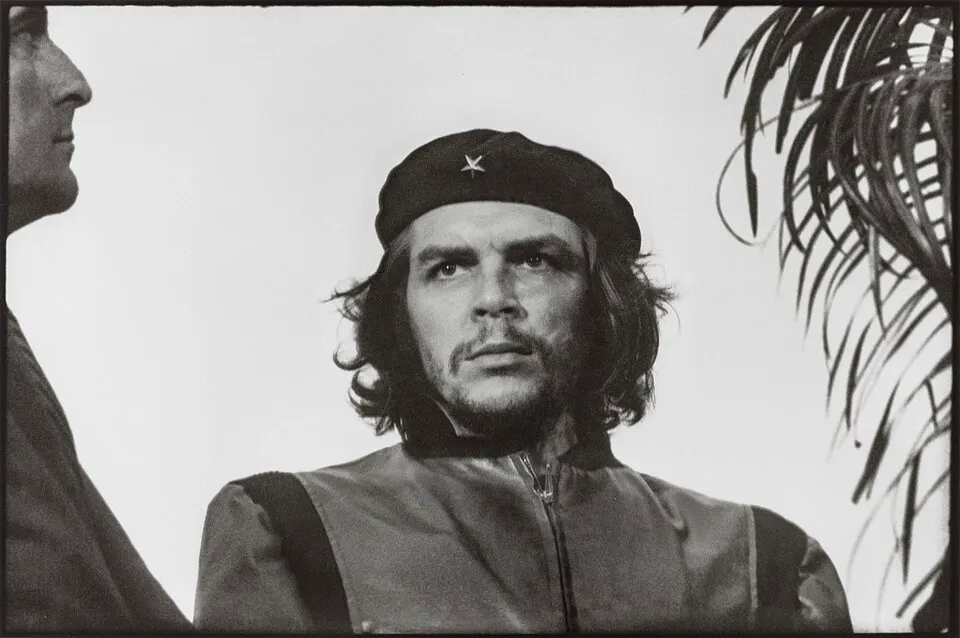
The full frame, not the poster crop. The profile on the left and the palm on the right are how you spot reproductions of the original negative.
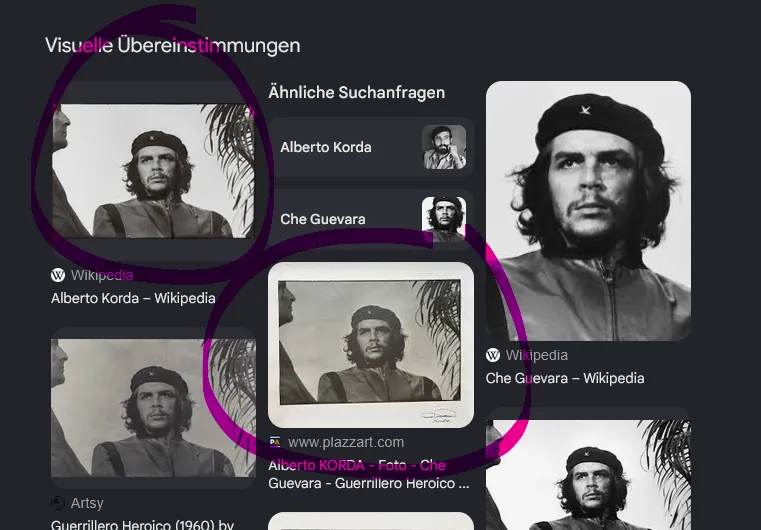
One upload, and the top matches already contain both answers that matter: the photograph’s name and the name it’s credited under.
There is no ambiguity to resolve and no chain to follow. The prompt says as much: “Everyone knows the face; almost nobody knows the day.” The identification is free. Everything that scores is in the metadata.
Where the points actually are
The photographer, date, and city all appear on the same reference page. So on paper this is a copy-paste. In practice there are two places to lose it, and both are the kind of error that comes from knowing more than you need.
Trap 1 — The name he’s credited under
The photographer’s birth name is Alberto Díaz Gutiérrez. He worked as Alberto Korda, and the photograph is universally credited to Korda.
The flag specification is precise about this: “the surname he is credited
under, on its own.” That’s Korda.
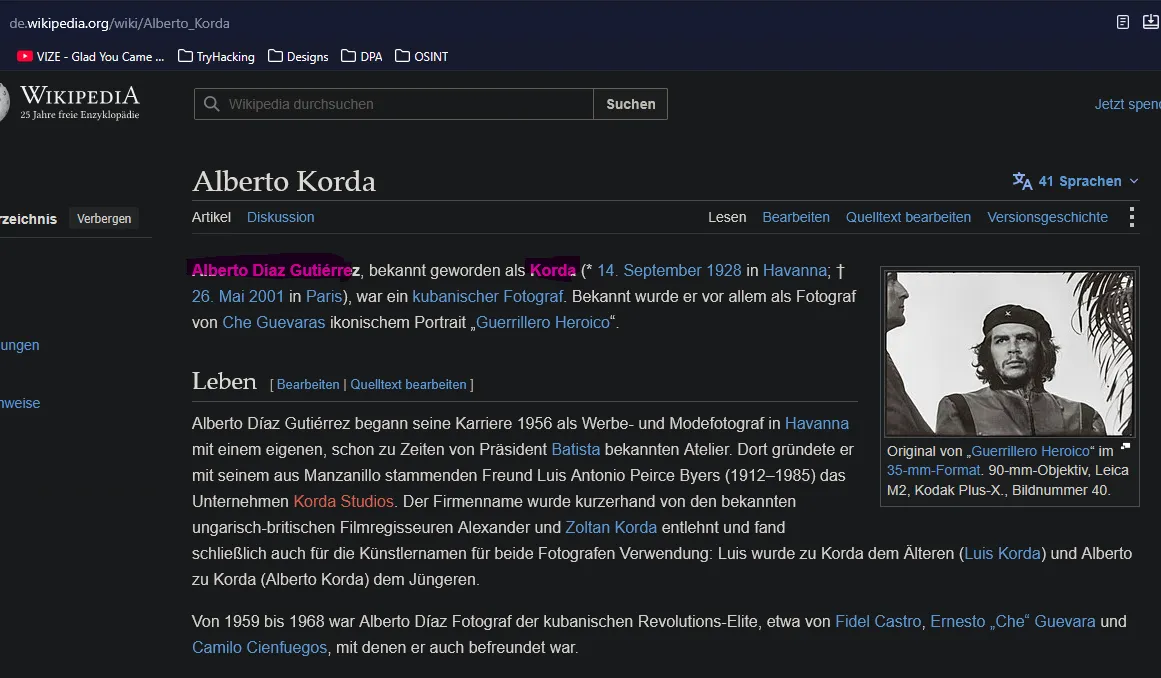
Both names sit in the article’s first sentence. The prompt asks for the one after “known as”.
The failure mode is doing extra research and being punished for it. A solver who
digs past the credit line finds the legal name and reasons that Gutiérrez — or
Díaz Gutiérrez — is the “real” surname. It is, biographically. It is not the one
he is credited under, which is what the prompt asked for. The phrase “on its own”
is a second guard, ruling out Alberto_Korda or any compound form.
Trap 2 — The date of the event vs. the date of the exposure
This is the sharper one, and it’s what the prompt is pointing at with “the day the shutter fired.”
Korda took the photograph at the memorial service for the victims of the La Coubre explosion in Havana. The explosion itself occurred on 4 March 1960. The memorial — where Guevara appeared on the platform and Korda made the two frames — was held the following day, 5 March 1960.
Both dates sit within a sentence or two of each other in most accounts of the
photograph. A solver skimming for “La Coubre 1960” picks up the explosion date and
submits 1960-03-04. The correct value is the date of the exposure:
1960-03-05.
Note how carefully the prompt is worded to make this fair: it does not say “the date of the event” or “the date it was taken” — it says “the date the shutter fired.” That phrasing exists specifically to distinguish the exposure from the incident it commemorated.
The city
Havana — the memorial was held in Havana, Cuba. The spec asks for “the usual
English spelling,” which rules out La Habana and Habana. This is the same
naming-authority pattern that runs through the whole Trace board, just in its
gentlest form.
Flag
trace{Korda_1960-03-05_Havana}Takeaways
- When identification is trivial, the challenge is elsewhere. A prompt that tells you the subject is universally recognisable is telling you the points are in the details, not the ID. Budget your effort accordingly.
- “Credited under” is a real constraint. Pseudonyms, professional names, and legal names diverge constantly in photography, art, and journalism. The attribution line is a different fact from the birth certificate, and challenges that specify one are not asking for the other.
- Extra knowledge can cost you. Both traps here punish the solver who researches past the answer — one into biography, one into the surrounding event. Read the question’s scope before widening the search.
- Precise prompt language is load-bearing. “The shutter fired”, “on its own”, “usual English spelling” — three qualifiers, three disambiguations. On a well-written card, no phrase is decorative.
Sources
- Guerrillero Heroico — the photograph: 5 March 1960, Havana, La Coubre memorial; carries the “reproduced more than any other image” claim
- Alberto Korda — born Alberto Díaz Gutiérrez, credited as Korda; both names in the first sentence
- La Coubre explosion — the explosion on 4 March 1960 and the memorial the next day where the frame was made; the date trap in one article
- Challenge: Athena Trace 2026 — “Everyone Knows the Face”
Image credits
Guerrillero Heroico (Alberto Korda, Havana, 5 March 1960) is reproduced here in its uncropped frame for identification purposes. Search-result and Wikipedia screenshots are the author’s own.